Will Bankruptcy Ruin My Credit Forever? What Seattle Filers Should Know
Many people considering bankruptcy in Seattle worry about the impact it will have on their credit. It’s common to fear that filing for Chapter 7 or Chapter 13 will permanently damage your credit score. The truth is, bankruptcy does have an impact but it is not permanent. With careful planning and responsible financial habits, you can recover your credit over time and regain financial stability.
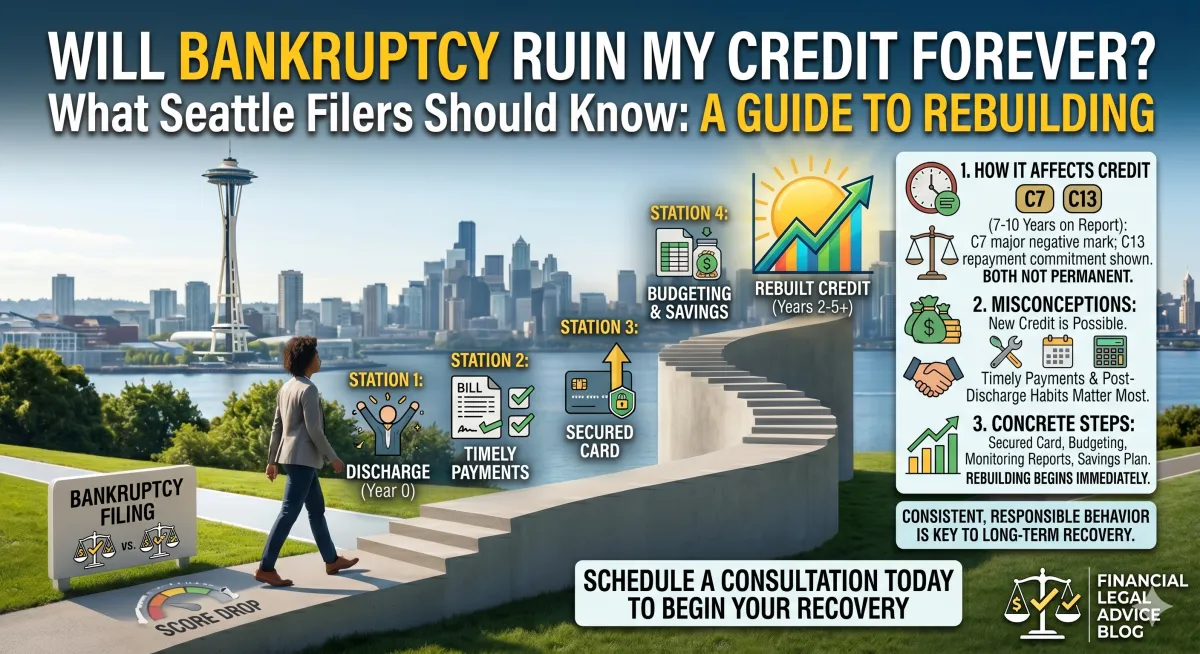
How Bankruptcy Affects Your Credit
Bankruptcy affects your credit in different ways depending on the type of filing:
Chapter 7 bankruptcy: Stays on your credit report for 7–10 years from the filing date. It eliminates most unsecured debts, providing a fresh start but showing a major negative mark.
Chapter 13 bankruptcy: Typically remains on your credit report for 7 years, as it involves a repayment plan that demonstrates your commitment to paying off debts.
While your credit score may drop initially, this is usually temporary, and your ability to rebuild begins immediately after discharge.
Common Misconceptions About Bankruptcy and Credit
Many people believe that bankruptcy will destroy their credit forever. Here are some facts to consider:
Bankruptcy does not prevent you from obtaining new credit. Lenders may offer secured cards or small loans as part of rebuilding.
Your financial habits after bankruptcy are more important than the filing itself. Timely payments, budgeting, and responsible borrowing can improve your score over time.
Bankruptcy can actually help improve credit by eliminating overwhelming debt and making your financial situation more manageable.
Understanding these misconceptions helps reduce fear and empowers you to make informed decisions.
Steps to Rebuild Your Credit After Bankruptcy
Rebuilding credit after bankruptcy is entirely possible with the right approach:
Make all payments on time: Bills, utilities, and remaining debts must be paid promptly.
Use secured credit cards or small loans responsibly: These tools help demonstrate financial reliability.
Monitor your credit reports regularly: Ensure there are no errors and that discharged debts are correctly reported.
Create and follow a budget: Keeping spending under control prevents future debt problems.
Consistent, responsible financial behavior is key to restoring your credit over time.
While bankruptcy will impact your credit, it does not ruin it forever. With proper planning, financial discipline, and professional guidance, Seattle filers can rebuild their credit and achieve long-term financial health.
Schedule a consultation with a Seattle bankruptcy attorney today to discuss your options and create a strategy for post-bankruptcy credit recovery.
